
GPS for Spacecraft Attitude & Translation Control
A commercial GPS receiver was used for the first time to help determine the attitude (i.e. orientation or flight dynamics) of a spacecraft on the Stanford-led Gravity Probe B (GP-B) Mission.
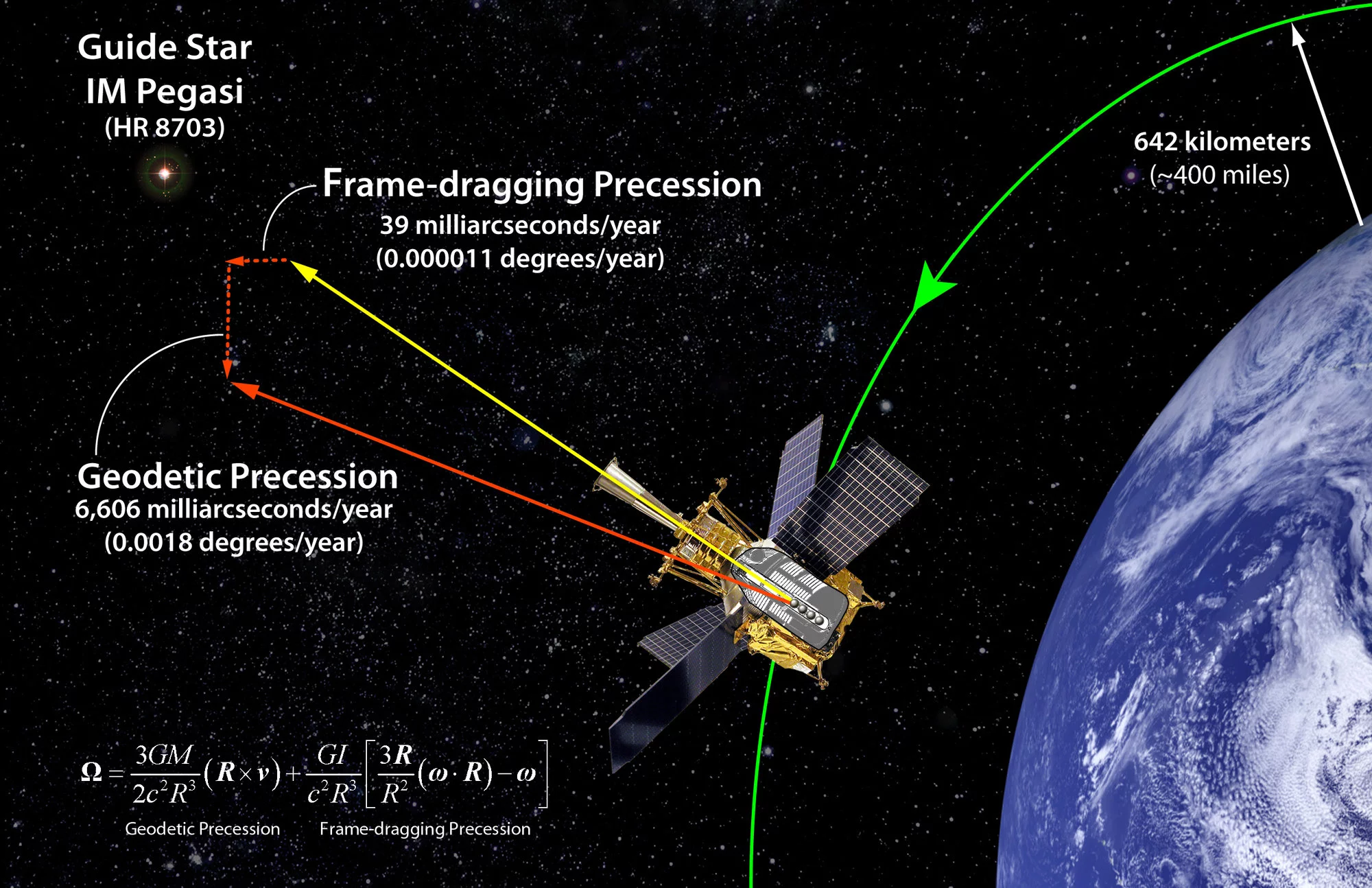
In the late 1980s, a special GPS receiver was developed that could accommodate a rolling spacecraft (i.e. about 1 rpm) in low Earth orbit. The spacecraft had extreme pointing requirements and needed to maintain its orbit to within +/- 25 meters. The spacecraft's attitude control system performed flawlessly on-orbit during the 18-month mission.
Professor Brad Parkinson led the technical development of GP-B. Many of the future uses for GPS were direct spin-offs from GP-B.
Stanford originally received NASA funding for this 40+ year landmark experiment.
For More Information
- For further details, see the Stanford Gravity Probe B website (einstein.stanford.edu)